Japan is a dream destination for many travelers — rich in culture, history, and unforgettable experiences. But if you have tattoos, you may be wondering: “Do I have to cover my tattoos in Japan?”
Tattoos can sometimes be misunderstood in Japan due to their historical association with organized crime. While attitudes are slowly changing, certain public places still have restrictions that might catch foreign visitors off guard.
In this article, we’ll guide you through where you might need to cover your tattoos, how people react to tattoos on foreigners, and practical tips to enjoy your trip without stress. Whether you have a small design or a full sleeve, this guide will help you navigate Japan respectfully and confidently.
Places Where You May Need to Cover Tattoos
Although Japan is a modern and welcoming country, certain public spaces still maintain strict rules about visible tattoos. These restrictions are rooted in social norms and cultural perceptions, and they can vary from one location to another. Here’s a breakdown of the places where you might be asked to cover your tattoos — and what to expect when visiting them.
| Facility Type | Tattoo Policy | Notes |
|---|---|---|
| Onsen (Hot Springs) | ❌ Often not allowed | May accept if covered or private bath |
| Public Pools | ❌ Usually not allowed | Rules vary by region |
| Gyms & Fitness Clubs | ⚠️ Case-by-case | Covering tattoos often required |
| Theme Parks | ✅ Mostly allowed | Large tattoos may be asked to cover |
| Hotels | ✅ Generally allowed | Shared baths may have restrictions |
Onsen (Hot Springs) and Sento (Public Baths)
Traditional Japanese bathhouses are among the most common places where tattoos are not allowed. Many onsen (natural hot springs) and sento (public baths) have policies that prohibit customers with tattoos from entering, regardless of nationality.
This is largely due to the lingering stigma associating tattoos with yakuza (organized crime groups). While these rules are slowly evolving, many facilities still enforce them strictly. If you plan to visit an onsen, it’s best to check in advance or look for a tattoo-friendly location.
Tip: Some onsen offer private baths or allow small tattoos if they are covered with a sticker or bandage.
Public Swimming Pools and Beaches
Public pools, especially those operated by municipalities or schools, often follow similar policies as onsen. Visible tattoos may be seen as disruptive or intimidating, particularly in family-friendly environments.
Beaches tend to be more relaxed, but even there, you may encounter local signs requesting visitors to cover tattoos, especially during peak seasons or at organized beach resorts.
Wearing a rash guard or swim shirt is a good way to avoid unwanted attention and stay sun-protected at the same time.
Gyms, Spas, and Fitness Centers
Fitness centers and hotel gyms may also have rules against visible tattoos. This is especially true for Japanese-operated chains or high-end wellness spas, which may prioritize a conservative image for their clientele.
In practice, you might not be denied entry outright, but staff could request that you wear clothing to cover your ink. Bringing a towel or wearing a sleeved workout shirt is a simple precaution.
Theme Parks and Amusement Facilities
Many theme parks in Japan are relatively tolerant regarding tattoos, especially in large urban areas. However, they typically reserve the right to ask guests to cover tattoos that are large, graphic, or potentially offensive, depending on the situation and the staff’s discretion.
While you’re unlikely to be denied entry just for having visible tattoos, it’s wise to bring a light jacket, long sleeves, or tattoo covers — particularly if your tattoos are highly visible or cover a large area. Being prepared helps ensure a smooth experience and shows respect for local expectations.
Hotels and Ryokan (Traditional Inns)
Most hotels do not have strict rules regarding tattoos, but ryokan (traditional Japanese inns) and those with shared bath facilities might follow similar policies as onsen. If your accommodation includes a communal bath, check whether tattoos are accepted or if private bathing options are available.
For Western-style hotels, especially in major cities, tattoo visibility is rarely an issue — but it’s still polite to be mindful of local customs.
Can Tourists Be More Leniently Treated?
One of the most common questions among tattooed travelers is: “Do the rules really apply to foreigners, too?” The answer is—yes and no. While official policies often apply equally to everyone, in practice, foreign tourists may experience more leniency or flexibility depending on the setting.
How Locals View Tattoos on Foreigners
Many Japanese people recognize that tattoos have different meanings in other cultures — often representing art, fashion, or personal stories. As a result, tattoos on non-Japanese visitors are often viewed with curiosity rather than suspicion.
That said, not everyone will distinguish between a foreign tourist and a local at first glance, especially in crowded public spaces. If someone does notice your tattoo, they’re more likely to stare out of surprise than disapproval.
In general, you won’t face direct confrontation, but being mindful of your surroundings goes a long way in avoiding discomfort — for both you and others.
Staff Discretion and Case-by-Case Policies
Even in places with official “no tattoos” rules, the enforcement often depends on the staff. For example, some onsen or gyms might quietly overlook small or discreet tattoos if the person is clearly a respectful tourist.
However, some staff may strictly follow the rules regardless of context. It’s not uncommon to receive a polite request to cover up — or, in rare cases, to be denied entry. This is why it’s helpful to ask ahead of time or check the facility’s website for tattoo policies.
Regional Differences in Attitudes
Larger cities like Tokyo, Osaka, and Kyoto tend to be more international and open-minded, especially in areas popular with tourists. In these places, you’re more likely to find tattoo-friendly accommodations, cafes, and even onsen.
In contrast, rural areas and more traditional regions may still hold conservative views, where tattoos (even on foreigners) are less accepted. Being prepared to adapt your appearance slightly — such as wearing a cover-up at a countryside hot spring — can help you travel more smoothly across regions.
How to Cover Tattoos in Japan (If Needed)
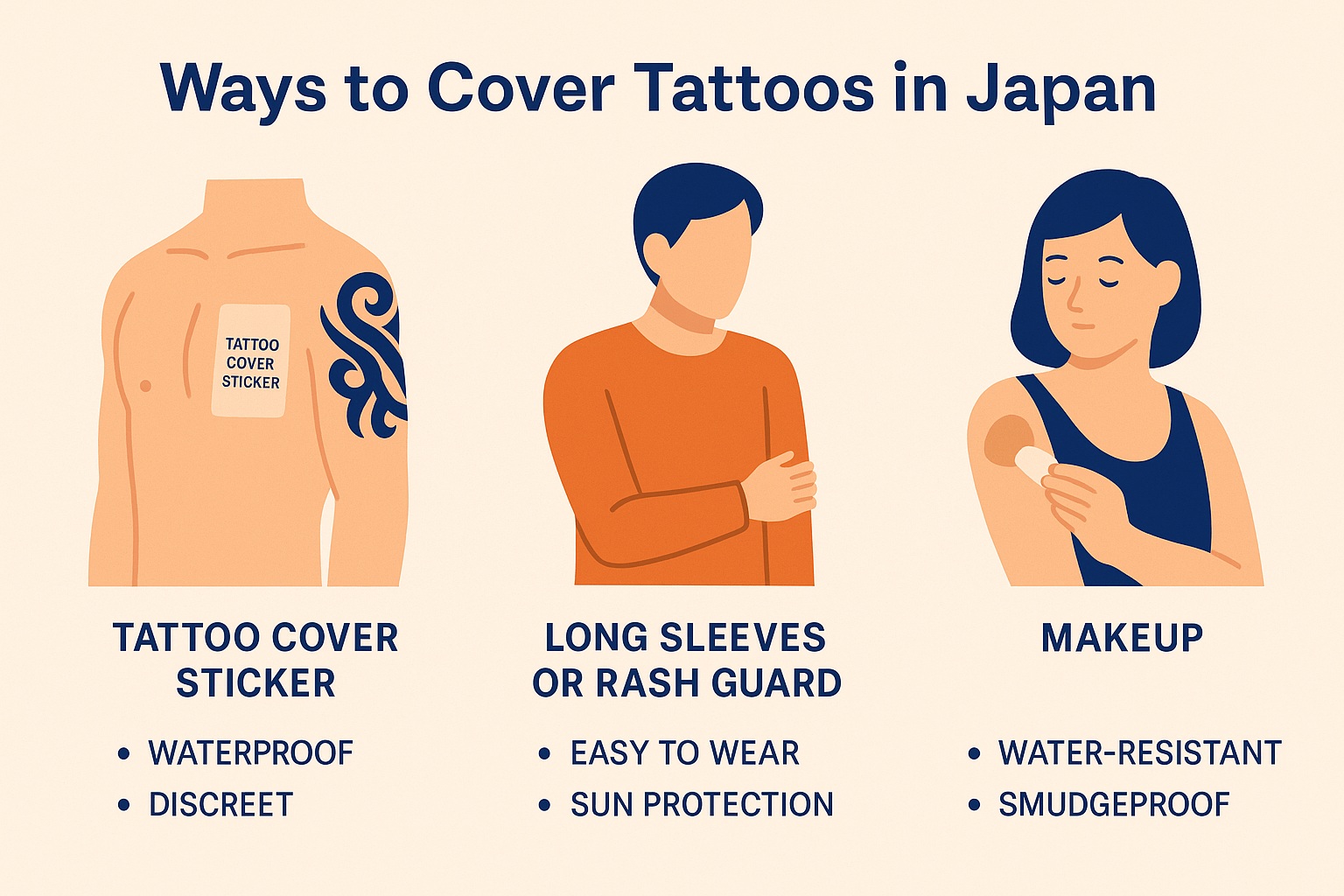
While not every situation in Japan will require you to hide your tattoos, it’s helpful to be prepared — especially when visiting traditional facilities like hot springs, public pools, or fitness centers. Fortunately, there are several easy and affordable ways to cover tattoos when needed, without compromising your comfort.
Tattoo Cover-Up Stickers and Sleeves
One of the most common solutions in Japan is tattoo cover-up stickers (also called “tattoo seals”). These are skin-toned, waterproof adhesive patches that can be placed over your tattoo. They’re discreet, effective, and often sold at drugstores, convenience stores, or online retailers like Amazon Japan.
Another popular option is UV-protective tattoo sleeves — lightweight arm or leg sleeves made from breathable material. They’re especially useful for larger tattoos or when visiting places with strict appearance policies.
Tip: Look for stickers labeled as “タトゥー隠し” (tattoo kakushi) when shopping in Japan.
Wearing Long Sleeves or Rash Guards
A simple and effective way to hide tattoos — especially in casual environments — is to wear long sleeves, lightweight jackets, or rash guards (used at beaches or pools). These not only help you blend in more easily but also protect you from sunburn or cold weather.
Rash guards, in particular, are a great option for water activities or when visiting beaches where tattoos may be frowned upon.
Using Waterproof Makeup
If you prefer a more seamless look, waterproof concealer or foundation can be used to mask tattoos. Several Japanese and international brands offer products specifically designed for long-lasting, smudge-proof coverage.
While this method works best for small to medium tattoos, it requires careful application and touch-ups throughout the day. It’s a good option for formal occasions or when wearing long sleeves isn’t practical.
Where to Buy Tattoo Covers in Japan
You can find tattoo cover products in a variety of places:
- Drugstores (e.g., Matsumoto Kiyoshi, Welcia)
- Don Quijote (a popular discount store chain)
- 100-yen shops (e.g., Daiso)
- Online marketplaces (Amazon Japan, Rakuten)
Staff may not always be familiar with the term “tattoo cover,” so showing a photo or saying “タトゥーかくすシールありますか?” (Do you have tattoo cover stickers?) can help.
When You Don’t Need to Cover Tattoos
While certain places in Japan may still frown upon visible tattoos, it’s important to remember that the situation is far from black-and-white. In many modern or tourist-friendly settings, you can freely show your tattoos without any trouble. Understanding where and when it’s okay can help you relax and enjoy your trip without unnecessary stress.
Tattoo-Friendly Spots and Onsen
In recent years, a growing number of tattoo-friendly onsen have started welcoming both Japanese and foreign guests with tattoos. These establishments either explicitly state their acceptance or allow tattoos if they are covered with a seal or sticker.
Websites like Tattoo-Friendly.jp or private booking platforms often list these locations. If visiting a hot spring is on your travel wishlist, doing a little research ahead of time can make all the difference.
Tattoo Culture in Urban Areas (Tokyo, Osaka)
Major cities like Tokyo, Osaka, and Yokohama tend to be more cosmopolitan and accepting of diverse appearances — tattoos included. In trendy neighborhoods like Shibuya, Harajuku, Shimokitazawa, or Amerikamura in Osaka, it’s not uncommon to see young locals proudly showing their ink.
Most cafes, shops, and nightlife spots in these areas won’t bat an eye at visible tattoos, especially if you carry yourself respectfully.
Private Experiences (Private Onsen, Airbnb, etc.)
If you’re concerned about tattoo restrictions but still want to enjoy traditional experiences, private alternatives are a great solution.
For example:
- Private onsen baths (貸切風呂 / kashikiri buro) in ryokan allow you to bathe alone or with your group, making tattoo visibility a non-issue.
- Airbnb or vacation rentals give you full privacy in accommodations with baths or hot tubs.
- Private gym or spa sessions can also be booked at some locations.
These options allow you to relax on your own terms, without worrying about strict policies or being watched.
Tips for Traveling with Tattoos in Japan
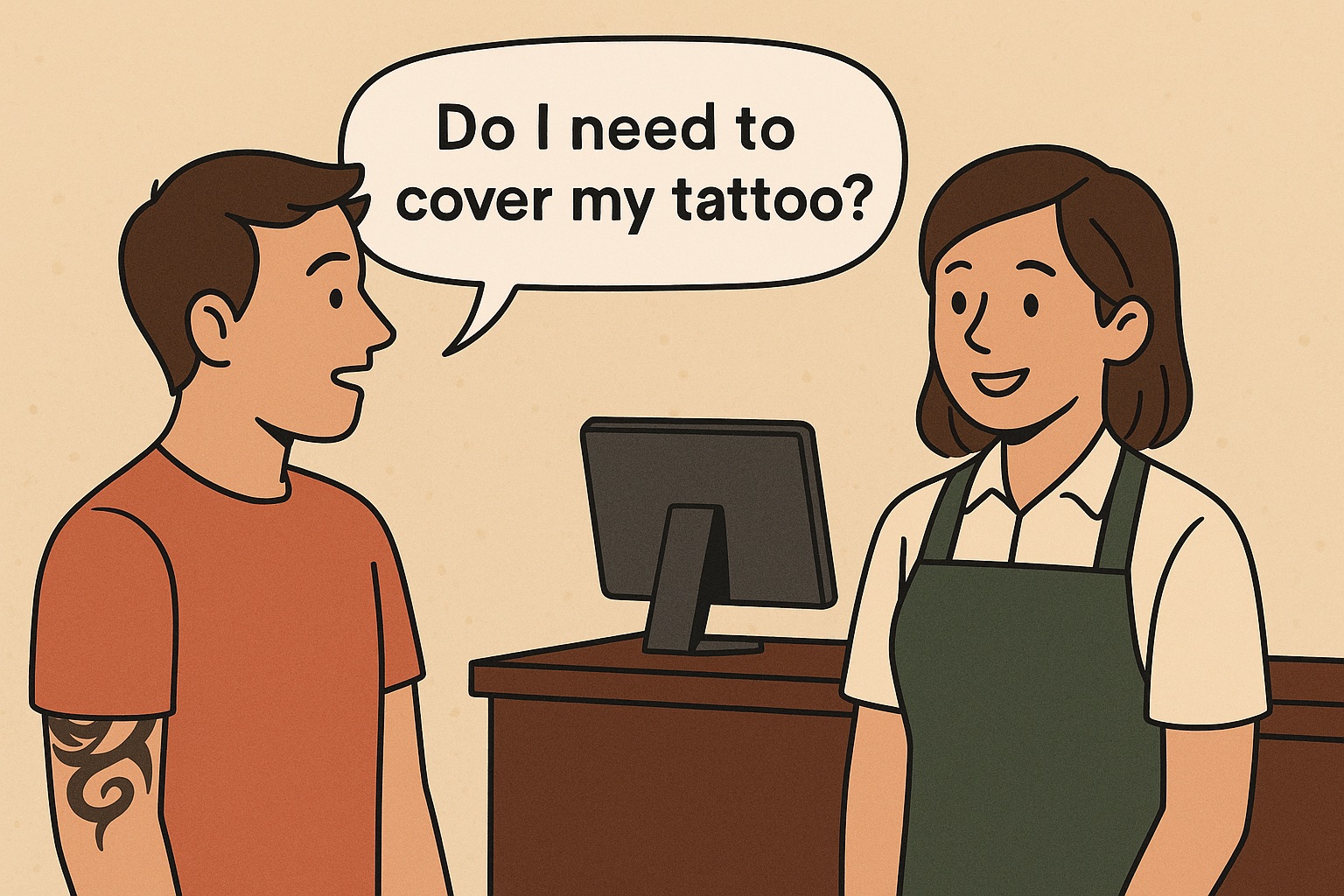
Having tattoos doesn’t mean you need to miss out on traditional Japanese experiences — you just need to travel with a little preparation and awareness. Here are some practical tips to help you navigate Japan confidently and respectfully as a tattooed traveler.
How to Ask If Tattoos Are Allowed (Japanese Phrases)
When in doubt, it’s perfectly okay to ask if tattoos are accepted at a facility. Many Japanese staff are helpful and understanding, especially if you approach them politely. Here are a few useful phrases:
- タトゥーがありますが、大丈夫ですか?
Tattoo ga arimasu ga, daijōbu desu ka?
“I have a tattoo — is that okay?” - タトゥーを隠せば、入ってもいいですか?
Tattoo o kakuseba, haitte mo ii desu ka?
“If I cover my tattoo, is it okay to enter?” - 貸切風呂はありますか?
Kashikiri buro wa arimasu ka?
“Do you have private baths?”
Tip: If you’re not confident speaking, typing these phrases into a translation app or showing a prepared note can also work well.
Checking Tattoo Policies in Advance
Before visiting onsen, gyms, spas, or pools, it’s wise to:
- Check the official website for tattoo-related policies
- Call or email the facility (many tourist destinations now offer English support)
- Search travel forums or use platforms like Google Reviews or TripAdvisor to see if other tattooed visitors had issues
This small step can save you from uncomfortable surprises and help you plan alternatives if needed.
Being Respectful of Local Customs
Even if you feel comfortable showing your tattoos, being aware of your environment is key to having a positive experience. Here are a few simple habits that go a long way:
- Cover up when entering more traditional or family-oriented places
- Avoid drawing attention to tattoos in rural areas or conservative settings
- Respond politely if someone asks you to cover your ink — it’s rarely personal, just cultural
By showing cultural sensitivity, you not only enjoy smoother travels, but also contribute to the slow shift in perceptions toward tattoos in Japan.
Final Thoughts: Embracing the Experience Respectfully
Tattoos in Japan can still be a sensitive topic in certain situations — especially in traditional settings like onsen, gyms, or public pools. However, that doesn’t mean you need to hide who you are or miss out on memorable experiences.
The truth is, attitudes are changing, and many places are becoming more open and accommodating, especially toward foreign visitors. That said, policies can vary from place to place, and much depends on context, discretion, and mutual respect.
By doing a little research ahead of time, carrying simple cover-up items, and staying aware of your surroundings, you can travel with confidence — and without stress. Being respectful of Japanese customs not only helps you blend in more easily, but also encourages a more inclusive environment for future tattooed travelers.
In the end, it’s not about hiding your identity — it’s about understanding and adapting to the culture you’re visiting. And in doing so, you’ll likely find that Japan is more welcoming than you imagined.